
Every Waco foundation repair starts with the ground beneath your home, and in Waco, that ground is expansive Blackland Prairie clay. This soil behaves like a sponge: it swells when it absorbs water and shrinks as it dries out. That constant push-and-pull is what stresses and cracks foundations over time.
How much your foundation moves depends on 3 things: your soil’s plasticity index (how much it expands and contracts), your foundation type, and where in Waco you live.
All three change from one neighborhood to the next. Below, see what’s under your ZIP and what a repair typically involves.
Overview
- Dominant soil: Blackland clay (vertisol), a heavy, expansive clay that swells and shrinks with moisture
- Annual rainfall (1991–2020): 36.4″, with a 3.4″ swing between wet and dry seasons that keeps the soil moving
- Monthly swing: rainfall drops from 5.2″ in October to 1.8″ in August, drying and shrinking the clay at its worst point
What is PI (Plasticity Index)?
PI is a measure of how much a soil moves with moisture, the higher the number, the more it swells when wet and shrinks when dry. Anything above 35 is considered very reactive, so Waco’s clay sits right in the range that gives foundations the most trouble.
Waco gets about 36.4″ of rain a year, but it arrives unevenly: roughly 5.2″ in October against 1.8″ in August. That 3.4″ seasonal swing cycles the clay and works against foundations year after year.
Waco Foundation Repair by ZIP
Waco Soil Types
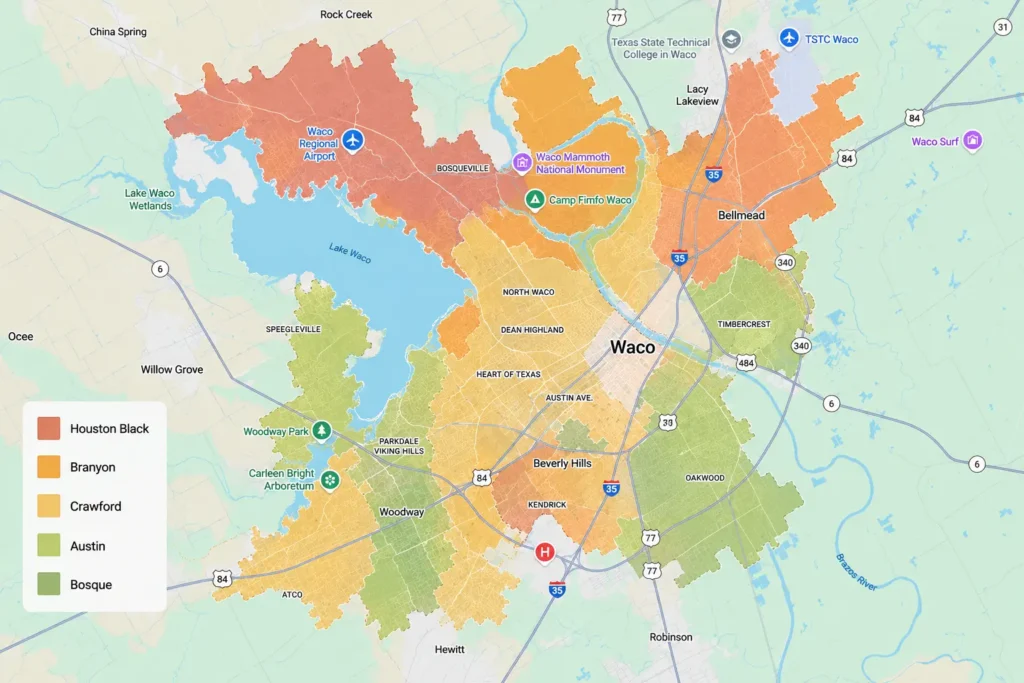
Waco sits on "expansive" clay, soil that swells up when it rains and shrinks when it dries out. That constant movement is what pushes on foundations and cracks them. But not all Waco soil moves the same amount. Here's what's under your neighborhood, from the most troublesome to the least:
- Houston Black - The worst offender and the most common. This deep black clay swells and shrinks a lot, opening cracks in the ground you can slip your hand into. Found under Karem Park, Baylor, Sanger Heights, and Bosqueville.
- Branyon - Nearly as active as Houston Black. Another deep clay that moves heavily with the seasons. Common in Bellmead and Lorena.
- Crawford - A thinner clay sitting over limestone. Still moves, but less than the deep clays. Found in Hewitt and McGregor.
- Austin - A siltier clay that's gentler on foundations, though it still shifts some. Common in Woodway.
- Bosque - The mildest of the bunch. A soft, loamy soil near creeks and floodplains that barely moves. Typical of China Spring.
Why Do Waco Foundations Move?
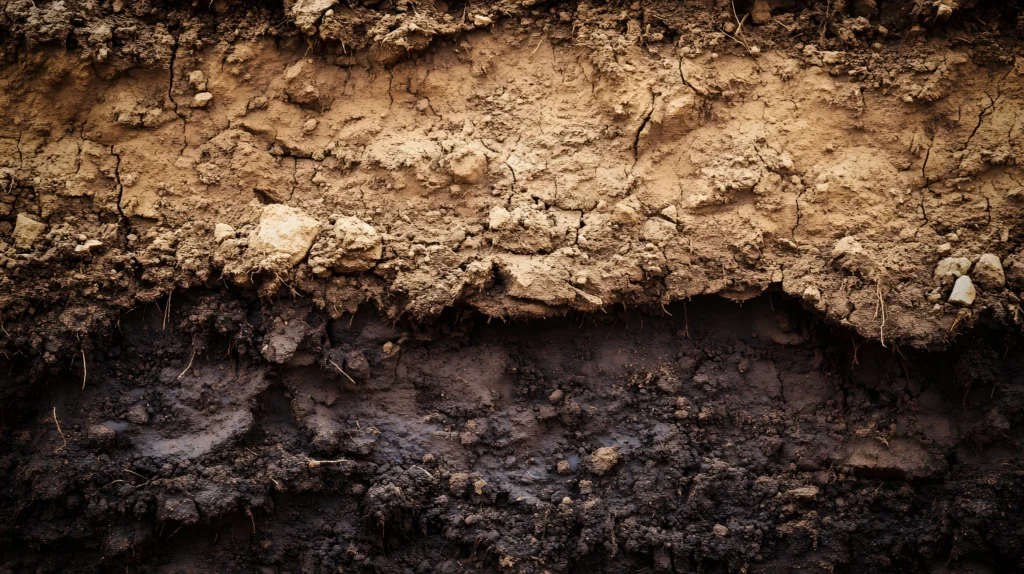
The reason Waco foundation repair is so common comes down to the soil. The whole area rests on the Blackland Prairie, a belt of smectitic clay that swells when wet and shrinks when dry.
The signature series is Houston Black (the official Texas state soil), with a plasticity index (PI) around ~35–48 and very high shrink-swell potential.
Need Waco Foundation Repair?
Free, no-obligation evaluation from a local G.L. Hunt specialist. · Call Now!
Not in Waco? We break down the texas soil and foundation risk by neighborhood in Austin and San Antonio too.
Waco Foundation Repair FAQ
Why do foundations move in Waco?
Waco sits on Blackland Prairie clay. Series like Houston Black and Branyon have high to very high shrink-swell potential. Rainfall swings from about 5.2" in October to 1.8" in August, so the clay expands and contracts every year.
Which Waco neighborhood has the most problematic soil?
Neighborhoods on Houston Black or Branyon soil, Sanger Heights, Brook Oaks/Baylor, Karem Park, Lorena, Bellmead, have the highest shrink-swell potential. Woodway, Hewitt, and China Spring sit on less reactive soils but still move.
Are homes in Waco slab or pier-and-beam?
It depends on the neighborhood's age. Homes built before about 1960 are usually pier-and-beam; slab became standard after. Slabs on this clay are repaired with piers; pier-and-beam homes are re-shimmed and re-leveled.
Sources: USDA-NRCS Official Series Descriptions & KSSL lab data (via UC Davis SoilWeb); NWS Fort Worth 1991–2020 rainfall normals for Waco Regional Airport. Soil series is characteristic per the McLennan County general soil map, not a parcel-level measurement; foundation type is by neighborhood construction era.