When The Slab Is Part Of The Operation
A warehouse floor carries the operation itself: racking, forklifts, fixed equipment, inventory movement and the daily flow of people and vehicles through the facility. When that floor settles or cracks, the condition has to be read alongside loading patterns, access routes and operating schedules, because a repair that addresses the structure while ignoring how the facility runs is not a workable plan.
G.L. Hunt works with plant managers, facility teams, property owners and logistics operators across Texas to understand how movement is affecting the building before a repair scope goes on paper.
Slab Movement Shows Up In Operational Ways
Settlement and cracking can affect more than the appearance of a warehouse floor. Changes in elevation can interfere with material-handling equipment, create uneven transitions and alter how loads are carried through the slab. Uneven surfaces and trip hazards along pedestrian and forklift routes also create OSHA exposure on every shift, which can turn a deferred repair into a safety finding.
The concern may first surface as a recurring forklift impact, a racking alignment issue or a joint that continues to deteriorate under traffic. In other facilities, movement becomes apparent near dock approaches, exterior truck courts or areas supporting fixed machinery.
Conditions that can lead facility teams to request an evaluation include:
- Cracked or settled warehouse slabs
- Uneven floors along forklift or pallet-jack routes
- Movement near racking, machinery or production equipment
- Sunken dock pads, ramps or exterior approaches
- Drainage or under-slab concerns occurring near settled areas
These symptoms do not all point to the same repair. Some involve the foundation system. Others are limited to a slab panel, joint, exterior concrete area or water-management problem.
Slab Repair And Foundation Repair Solve Different Problems
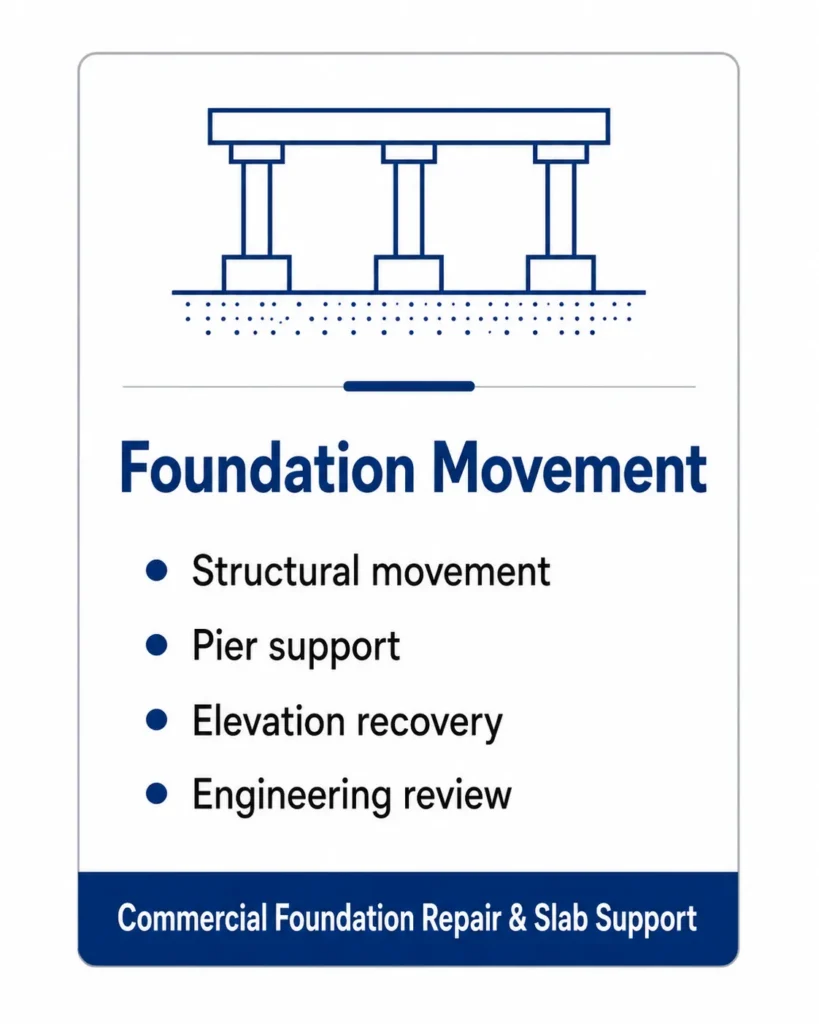
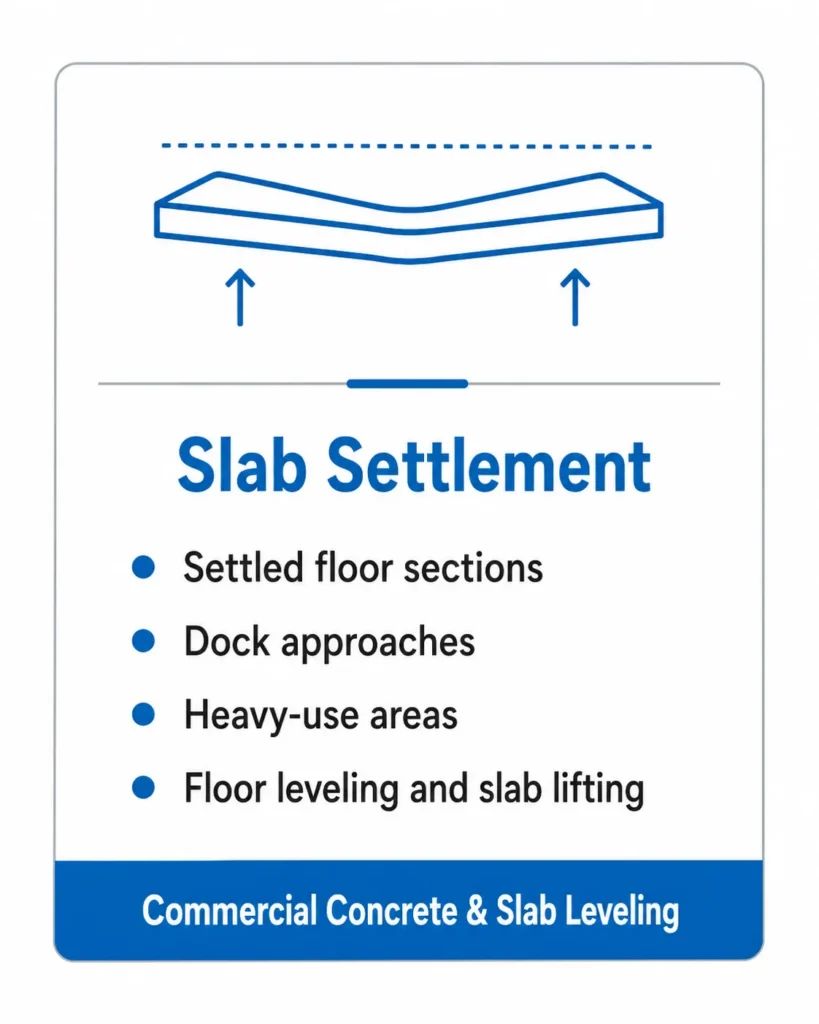
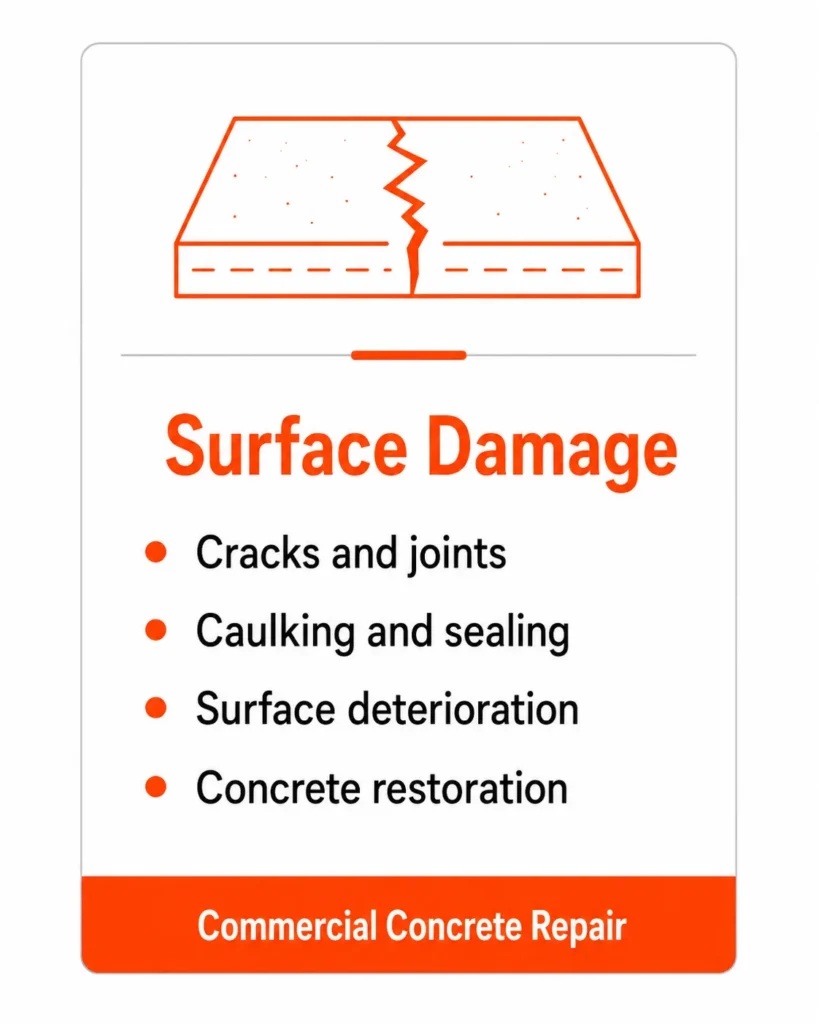
Visible damage does not always reveal which system is responsible. Similar cracks, low areas or joint deterioration can result from different underlying conditions, so the repair scope should be based on site findings, elevation data and the way the slab and foundation are performing. G.L. Hunt evaluates those conditions before determining whether the project calls for structural support, slab lifting or surface repair.
Planning Work Around An Active Facility
Industrial repair planning starts with the parts of the building that have to remain in use.
A distribution center operating multiple shifts cannot treat every aisle, dock door or staging area as equally available. A manufacturing plant may have machinery that cannot be moved without affecting production. Even a localized warehouse floor repair can disrupt a larger traffic pattern if access is not planned carefully.
G.L. Hunt coordinates work around the facility’s operating requirements, which can include sequencing the project by work zone, preserving access to part of a dock area or scheduling around lower-volume shifts. The exact approach depends on the repair scope and site conditions.
The aim is not to promise zero disruption. It is to establish where work can occur, what areas will be affected and how the project can move forward without treating the entire building as an open jobsite.
Dock Aprons, Ramps And Truck Courts
Loading areas experience a combination of truck traffic, forklift loads, repeated impacts and weather exposure. Settlement at a dock approach or ramp can affect the transition between the building and the vehicle, while joint deterioration can worsen under constant use.
Exterior truck courts and dock aprons can also be affected by drainage patterns and changing soil moisture. Where water repeatedly collects near settled concrete, the project may require separate drainage corrections rather than concrete work alone.
G.L. Hunt can review loading-dock and exterior concrete concerns as part of the broader property condition. Concrete lifting and repair scopes are then directed to the appropriate service rather than grouped under a generic warehouse repair recommendation.
Texas Experience For Industrial Properties
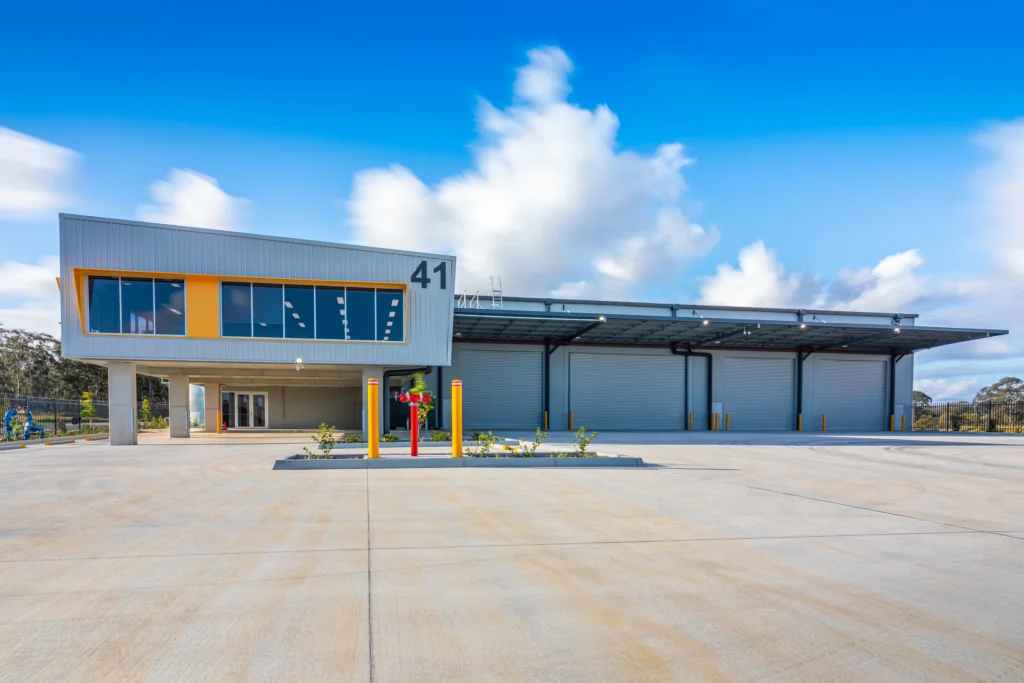
G.L. Hunt serves industrial, warehouse and distribution properties statewide, including facilities throughout DFW, San Antonio, Austin, Waco, Temple and the I-35 corridor.
Texas soil conditions can shift significantly as moisture levels change. Expansive clay, prolonged dry periods and heavy rain can affect foundations, exterior concrete and the support beneath slabs. Those regional conditions are considered alongside the building’s loads, drainage and operating environment.
Family-owned since 1987 and still run by its founding family, G.L. Hunt performs its core foundation, concrete and drainage work with a highly trained, vetted network of crews held to the G.L. Hunt standard, keeping the fieldwork under a clear line of accountability.
The complete commercial lineup, from foundation and concrete to drainage and below-slab access, is listed on the G.L. Hunt Commercial Services hub.
Schedule A Warehouse Foundation Assessment
Warehouse foundation repair should begin with a clear understanding of how the condition is affecting the facility. G.L. Hunt works with industrial property teams to separate structural, slab, concrete and water-related concerns before putting a project scope in place.
Related Articles
For more expert information about your foundation, crawl space and drainage needs, check out our helpful articles!