Solutions That Account For The Entire Property
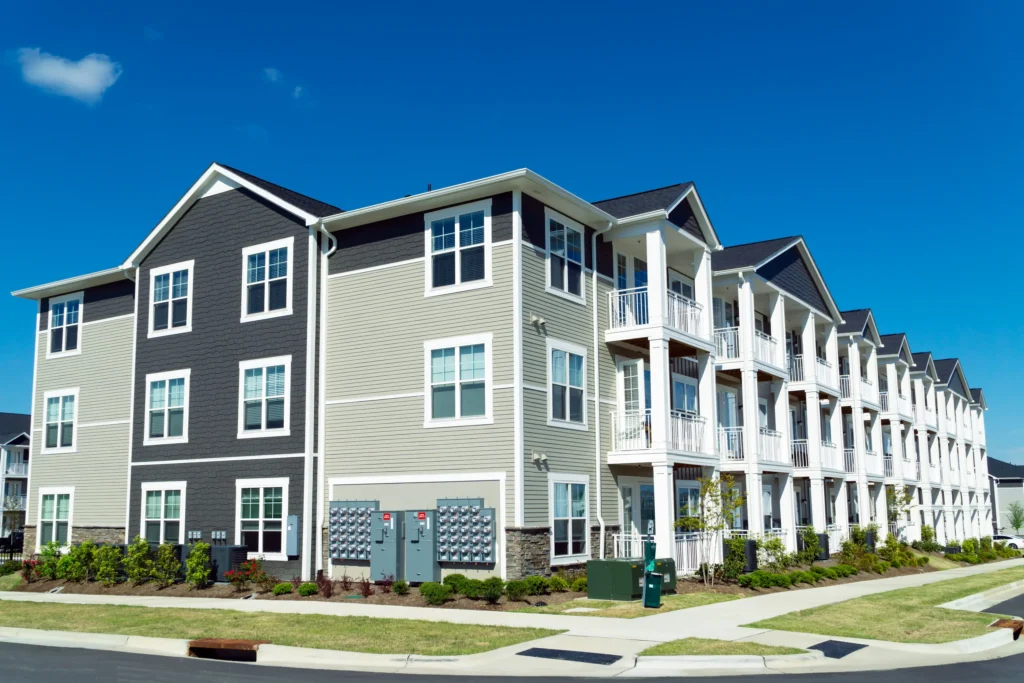
At a multifamily property, one repair concern may be connected to conditions elsewhere on the site. A settled walkway may interfere with resident access, while drainage or foundation problems may affect multiple buildings and complicate ongoing maintenance.
G.L. Hunt helps property managers and ownership teams understand the extent of these conditions and determine an appropriate path forward. We provide commercial repair services for apartment communities and other professionally managed properties throughout our Texas service areas, with each repair plan developed around occupancy and property operations.
Commercial Repairs Planned Around Managed Properties
Property management and multifamily repair services address structural and site conditions affecting buildings, walkways, parking areas and other shared spaces. Depending on the findings, the recommended work could involve foundation repair, concrete services, drainage improvements or crawl space remediation.
These concerns do not always develop separately. Poor drainage sometimes contributes to soil movement near a building, while settlement beneath a walkway can affect accessibility and water flow. Evaluating how the conditions relate helps define an appropriate scope instead of treating each visible symptom as a separate problem.
G.L. Hunt works with property owners, managers and other decision-makers to review these conditions and determine the appropriate next step. The evaluation also considers how access, resident activity and ongoing operations will influence the repair plan.
Signs A Multifamily Property Needs An Evaluation
Some repair needs are reported by residents or maintenance teams soon after they appear. Others become more noticeable during routine inspections or unit turns. Conditions that deserve further evaluation include:
- Cracks developing along interior or exterior walls
- Doors or windows that no longer open and close properly
- Uneven floors inside apartments or shared buildings
- Gaps forming around windows, doors or exterior finishes
- Sidewalks or concrete transitions that have settled
- Water collecting near buildings after rainfall
- Recurring moisture beneath buildings with crawl spaces
- Visible deterioration around affected concrete or structural areas
The presence of one sign does not establish the cause. For example, a cracked wall and a settled walkway might result from separate conditions or reflect movement occurring across the same portion of the property. A commercial assessment helps clarify what is happening before repairs are planned.
Property managers should also consider an evaluation when a recurring maintenance concern continues despite surface-level corrections. Repeated patching or water removal does not address the underlying condition when soil movement, grading or another site issue is contributing to the problem.
Problems These Services Address
A visible issue in one area of a multifamily property sometimes points to conditions elsewhere on the site. An assessment determines the extent of the concern and the appropriate response.
Depending on the findings, services could include foundation repair for documented movement or concrete repair for affected surfaces. Drainage improvements address concentrated runoff, while crawl space remediation targets persistent moisture beneath occupied buildings. The final scope reflects the areas involved and the conditions contributing to the problem.
How G.L. Hunt Plans Multifamily Property Repairs
The process begins with an assessment of the affected portion of the property. Our team documents visible conditions and examines how the building, surrounding concrete and drainage patterns are contributing to the concern. When several areas are involved, the evaluation considers the connections between them.
Property decision-makers receive a clear explanation of the findings and the recommended repair approach. Engineering documentation is incorporated when required by the project scope. This information helps the management team understand what the work is intended to correct before approving the repair plan.
Scheduling and access are considered as the scope is developed. Work near occupied units, leasing offices or frequently used walkways may require coordination with property staff. Larger projects may also be divided into phases to support site operations or align with ownership priorities.
After the approved work is completed, the team reviews the repaired areas according to the project requirements. The objective is to carry out a clearly defined solution based on the conditions documented during the assessment.
What Affects the Cost of Multifamily Property Repairs?
Pricing depends on the conditions found and the amount of work required. A localized section of settled concrete has a different scope than foundation movement affecting multiple units or a larger portion of a building.
Access also influences the repair plan, especially when work is located beneath an occupied structure or near a heavily used part of the property. Some projects require phased scheduling to maintain access or reduce disruption during the work.
The recommended repair method is another consideration. Drainage improvements, crawl space services or engineering requirements may be included when they are necessary to address the documented conditions. The evaluation allows G.L. Hunt to define the scope before presenting recommendations. This gives property decision-makers information they can review alongside operational needs and property priorities.
Financing options are available for approved projects.
Experience With Commercial Property Conditions Across Texas
G.L. Hunt has addressed foundation, concrete, drainage and crawl space concerns across Texas since 1987. That experience helps our team recognize that conditions at a multifamily community must be evaluated in the context of the larger property.
A repair recommendation should account for more than the most visible crack or settled section. Building use, surrounding site conditions and the effect of the work on residents all influence project planning. G.L. Hunt provides clear findings and a defined scope so property managers and ownership teams can make informed decisions without relying on guesswork.
Request A Multifamily Property Evaluation
If foundation movement, settled concrete, drainage problems or crawl space conditions are affecting a property you manage, request a commercial evaluation from G.L. Hunt. Our team will assess the affected areas and develop a repair plan suited to the property’s documented needs.
Frequently Asked Questions
Can G.L. Hunt Evaluate More Than One Building At The Same Property?
Yes. The assessment may include multiple buildings or affected site areas when they are part of the requested scope. Evaluating related conditions together may also help determine whether the concerns share a contributing factor.
Does The Property Need To Be Vacant During The Work?
Not necessarily. Occupancy requirements depend on the location and scope of the repair. G.L. Hunt considers resident access and ongoing property operations while developing the recommended plan. Property management teams receive the information needed to coordinate with residents when access to specific areas will be affected.
Can Repairs Be Completed In Phases?
Larger projects may be organized into phases when the scope and property requirements support that approach. Phasing may help ownership teams prioritize affected areas, coordinate access or plan the work around community operations.
Who Should Participate In The Property Evaluation?
The appropriate contact is usually someone familiar with the reported concerns, maintenance history and operational requirements of the property. This may be a property manager, maintenance leader, regional representative or ownership contact. Having relevant documentation available can help the team understand how the condition has developed.