
What Is a French Drain and How Does It Work?
A french drain is an underground drainage system designed to collect excess groundwater and redirect it away from areas where it could cause damage, particularly around home foundations, basements, retaining walls, and landscaping.
The french drain system works by harnessing a simple principle: water always follows gravity. The system is installed just beneath the ground’s surface at a slight downward slope, creating a path of least resistance that guides water away from vulnerable structures toward a safe discharge point, such as a drainage ditch, dry well, or street.
The Origin of French Drains
Despite the name, french drains have nothing to do with France. The system was developed and popularized by Henry Flagg French, an American lawyer and agriculturalist who described the technique in his 1859 book Farm Drainage.
French designed the system to address waterlogged farmland, and the concept has since evolved into a cornerstone of modern residential and commercial drainage.
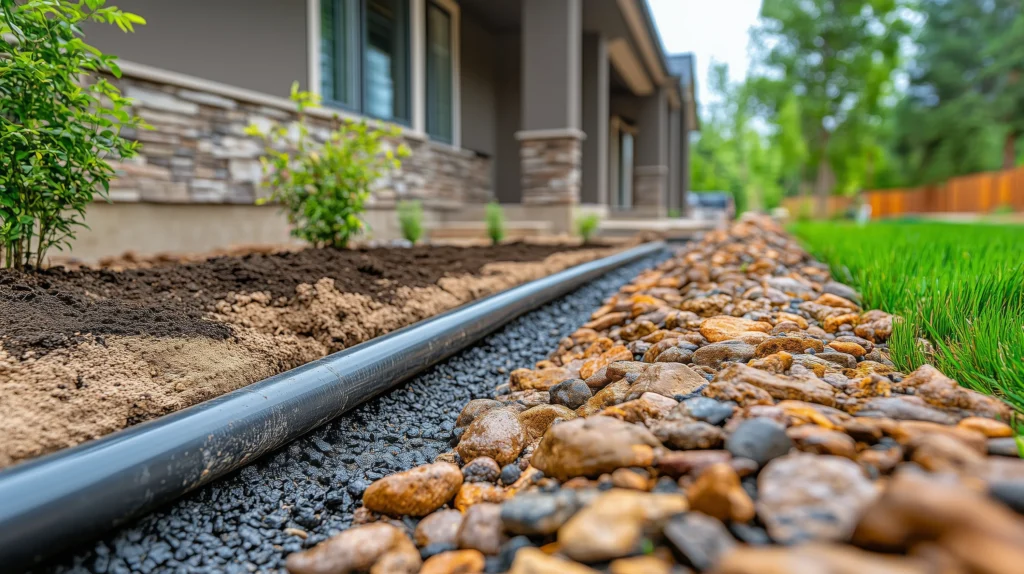
French Drain System: The Core Components
A standard french drain system consists of the following elements working together:
- A trench: excavated at a calculated depth and slope to direct water flow effectively.
- Landscape fabric or filter mesh: lines the trench to prevent soil and debris from entering the system and clogging it over time.
- Gravel or crushed rock: fills the trench and surrounds the pipe, allowing water to percolate through freely while filtering out fine particles.
- A perforated pipe: typically a 4-inch PVC or flexible corrugated pipe with small holes or slots that allow groundwater to enter and flow through toward the discharge point.
- A discharge outlet: the exit point where collected water is released safely away from the property.
When groundwater saturates the surrounding soil, it seeps through the gravel, enters the perforated pipe through its holes, and travels along the pipe to the discharge point. The filter mesh ensures that only water enters, keeping the pipe free of sediment that would reduce its efficiency over time.
Types of French Drain Systems
Not all french drains are built the same way, and what a french drain looks like can vary depending on its type and location. Depending on your property’s drainage problem, one of several configurations may be appropriate.

Yard or Landscape French Drain
These are shallow french drains installed in low spots of a yard or garden where water tends to pool after rain. They protect landscaping, lawns, and garden beds from waterlogging and root rot.
Interior French Drain
An interior french drain is installed inside the home, typically along the perimeter of a basement floor. It captures water that seeps through foundation walls or rises from below and channels it to a sump pump, which then expels it outside the home. This is the most common solution for chronic basement flooding.
Exterior French Drain
An exterior french drain is installed outside, around the perimeter of the foundation or in low-lying yard areas. It intercepts groundwater before it ever reaches the foundation walls, making it a proactive approach to water management. Exterior systems are particularly effective in areas with expansive clay soils that hold moisture close to the foundation.
Curtain Drain
A curtain drain (also called a linear french drain) is installed across a slope to intercept water flowing downhill toward a structure. Rather than surrounding the foundation, it cuts across the path of water above the problem area and redirects it to the sides of the property.
How Deep Does a French Drain Need to Be?
The correct depth for a french drain depends on its purpose:
- For foundation protection: typically 18 to 24 inches deep, placed at or slightly below the footing of the foundation to intercept water before it reaches the structure.
- For yard drainage: shallower installations of 12 to 18 inches are often sufficient for redirecting surface-level groundwater in low areas.
- For curtain drains on slopes: depth varies based on the slope and the point where water is intercepted, but generally ranges from 24 to 36 inches.
The slope of the trench is just as important as the depth. A minimum gradient of 1% (1 inch of drop for every 10 feet of run) is typically required to ensure water flows continuously toward the discharge point without pooling inside the pipe.
Signs You May Need a French Drain
How do you know if a french drain is the right solution for your property? Watch for these warning signs:
- Standing water or soggy patches in your yard that persist days after rain
- Water seeping through basement walls or pooling on the basement floor
- Soil that stays consistently wet and muddy around your home’s perimeter
- Foundation cracks, especially horizontal cracks in basement walls
- Efflorescence (white chalky deposits) on basement or foundation walls, indicating water intrusion
- Mold or mildew growth in basements or crawl spaces
- Erosion in landscaped areas after rainfall
- Retaining walls bowing or shifting due to hydrostatic pressure
Any of these signs suggests that water is not draining away from your property effectively, and a french drain installation could prevent far more costly damage from developing.
French Drain Installation: What the Process Looks Like
French drain installation is more involved than it may appear. Here is a general overview of the process a professional will follow:
Step 1 – Site Assessment and Planning
A drainage expert evaluates the property to identify the source of water intrusion, the natural flow of water across the land, soil composition, and the best discharge location. This planning phase determines the type, depth, length, and routing of the french drain.
Step 2 – Marking and Excavation
The trench path is marked and excavated to the required depth and slope. On residential properties, this often requires a small excavator or trenching machine, especially for deeper or longer installations.
Step 3 – Lining the Trench
Landscape fabric is laid into the trench to create a barrier between the gravel and surrounding soil, preventing sediment infiltration that would clog the system over time.
Step 4 – Adding Gravel and the Perforated Pipe
A bed of gravel is laid at the bottom of the trench, the perforated pipe is placed on top, and additional gravel is packed around and over the pipe. The pipe’s perforations face downward to allow water to enter from below.
Step 5 – Wrapping and Backfilling
The landscape fabric is folded over the top of the gravel to seal the system, and the trench is backfilled with soil. The surface is restored, often with sod or gravel, depending on the location.
Step 6 – Connecting the Discharge Outlet
The pipe is routed to a safe discharge point, a storm drain, dry well, or sloped area away from the home, and the outlet is protected with a mesh cap to prevent pests and debris from entering.
French Drain Cost
The cost of a french drain installation varies depending on the size and complexity of the project, the depth required, and local labor rates. As a general guide:
| Project Type | Estimated Cost Range |
|---|---|
| Simple yard french drain (50 ft) | $500 – $1,500 |
| Exterior perimeter drain (100 ft) | $1,000 – $6,000 |
| Interior basement french drain | $3,000 – $15,000+ |
| Curtain drain on a slope | $1,500 – $5,000 |
These are rough estimates, a professional assessment of your specific property is the only reliable way to determine actual costs. Book a free estimate and we’ll read your yard for you.
French Drain vs. Surface Drain: Which Is Right For You?
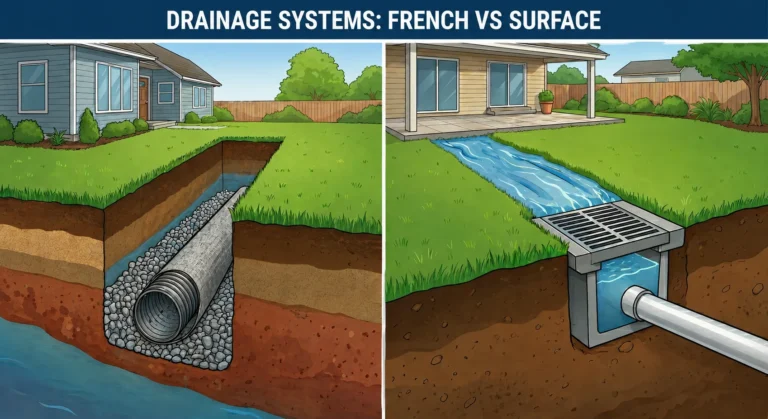
Understanding the difference between a French drain and a surface drain is crucial for addressing specific drainage issues. While French drains are installed underground and are ideal for managing groundwater, surface drains are placed on top of the ground to collect and remove surface water from areas prone to pooling, such as driveways or patios.
Choosing between a French drain and a surface drain depends on the source of your water problem. If groundwater is seeping into your basement or causing foundation issues, a French drain is likely the better option. A surface drain may be more suitable for managing rainwater runoff or preventing surface water from flooding specific areas.
Conclusion: Protect Your Home Before Water Damage Takes Hold
A french drain is one of the most effective, long-lasting tools available for protecting a home from the damaging effects of excess groundwater.
Whether you’re dealing with a soggy lawn, a wet basement, or early signs of foundation stress, the right french drain system, designed and installed by experienced professionals, can eliminate the source of the problem rather than just treating the symptoms.
Don’t wait until water damage forces an expensive repair. Have your drainage situation evaluated early, and give your home’s foundation the protection it deserves.
Reach out to the G.L. Hunt team of professionals to help you. Call us now!
FAQ
What is the difference between a French drain and a regular drain?
To understand what is a french drain, compare it to a regular drain. Regular drains collect surface water; french drains work underground, intercepting groundwater before it reaches your foundation through a gravel-surrounded perforated pipe.
How do I know if my french drain is working properly?
No standing water, dry basement walls, and no soggy soil after rain are the clearest signs. Check the discharge outlet after storms, active water flow means the french drain system is doing its job.
Does a french drain add value to a home?
Yes. A french drain installation signals solid moisture management to buyers and inspectors, while protecting your foundation from water damage, mold, and flooding, preventing repair costs far greater than the drain itself.
Related Articles
For more expert information about your foundation, crawl space and drainage needs, check out our helpful articles!
Drainage & Gutters
Drainage Contractor in Texas
Drainage Contractor in Texas: Protecting Your Foundation From the Ground Up Every drainage contractor in…
Drainage & Gutters
Sump Pump Installation
Standing water in your yard could mean foundation trouble ahead. Here's how sump pumps work,…
Drainage & Gutters
French Drain vs Surface Drain
French Drain vs. Surface Drain: Which One Does Your Yard Actually Need? If your yard…