
Foundation Repair Cracks
When we talk about foundation repair cracks, there’s a moment most homeowners know but rarely talk about. You’re walking through your house, maybe heading to the garage, maybe checking on the kids, and something catches your eye. A line in the wall. Thin, almost imperceptible. You stop. You stare. You tell yourself it’s probably nothing.
Then you keep walking.
That moment, that small decision to look away, is where foundation problems grow. Not in the ground. Not in the concrete. In the gap between what we see and what we’re willing to deal with.
This post is for the homeowner standing in that moment. The one who noticed the crack three weeks ago and hasn’t slept quite as well since.
How to Read Foundation Cracks
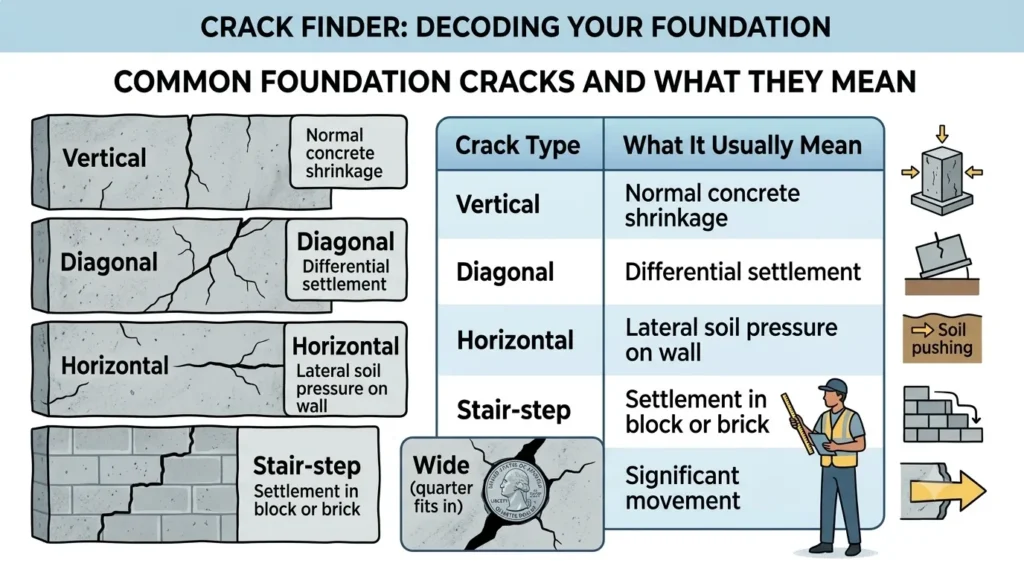
Not every crack is a crisis. But some are. Knowing the difference is where most homeowners get stuck.
Texas clay soil moves constantly, swelling with rain, shrinking in drought. Some cracking is an inevitable byproduct of that. The question is what kind.
If it’s growing, it’s not waiting for you.
The Doubt Phase
Almost everyone who calls a foundation repair company spent time talking themselves out of it first.
- It’s a new house.
- The previous owners would have said something.
- I just had an inspection.
That hesitation is understandable. Foundation repair carries a weight, financial, emotional, that a leaky faucet doesn’t. So the crack gets painted over. A piece of furniture goes in front of it. The problem waits.
The trouble is that most foundation issues don’t stay the same. They develop. And the longer the gap between noticing and acting, the narrower the range of solutions available, and the higher the cost of fixing them.
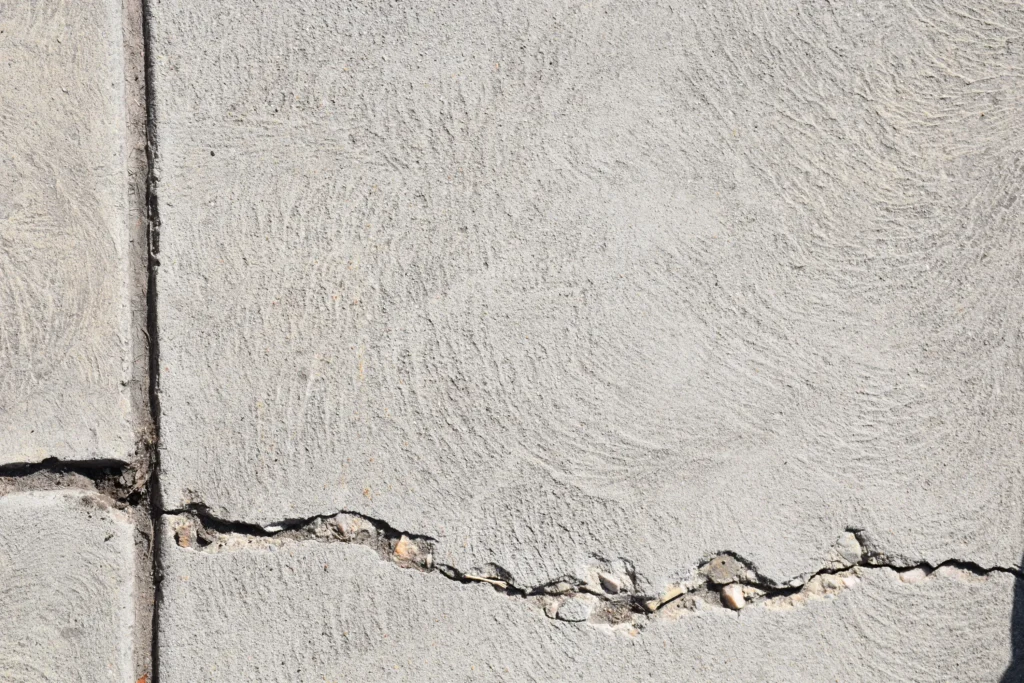
Foundation Crack Repair Methods
Epoxy and Polyurethane Injection
Best for stable, non-structural cracks where moisture intrusion is the main concern. Epoxy restores tensile strength to the concrete. Polyurethane is more flexible, better where minor movement is expected to continue.
Foundation Wall Repair for Lateral Pressure
When soil pressure is bowing or cracking the wall, injection isn’t enough. Structural solutions include:
- Carbon fiber straps to halt further movement
- Wall anchors connected to stable soil
- Steel I-beams against the interior wall face
Fix Foundation Cracks From Settlement With Piers
When the foundation itself has shifted, push piers or helical piers are driven past the unstable surface soil to load-bearing ground. The foundation is then stabilized, and in many cases lifted back toward its original position.
Crawl Space Foundation Wall Repair
Crawl space foundations often present multiple issues at once: moisture intrusion, wood rot, sagging floor systems, failed vapor barriers. Each has its own fix, and several are typically addressed together.
What Foundation Crack Repair Costs
There’s no single number here, and any company that gives you one without an inspection is guessing. What is consistent: foundation crack repair cost is directly tied to how far the problem has progressed.
A shrinkage crack caught early is a straightforward fix. That same crack, left alone while the underlying soil movement continues, can become a wall repair, a pier job, or both.
The math is simple:
- Early detection → more repair options → lower cost
- Delayed action → fewer options → higher cost
- Structural secondary damage → highest cost of all
An inspection tells you where on that scale you actually are.
Before the Crack Becomes a Crisis, Call Us.
Before the crack becomes a crisis is exactly the window you’re in right now. The fear around it is almost certainly larger than what you’ll actually find out when someone looks at it.
G.L. Hunt has been doing this work in Texas for a long time. We’ve seen the full range, from the hairline that needed nothing more than monitoring to the foundation that needed serious work. We’ll tell you honestly which one you’re looking at.
The first step is just finding out. Get your free inspection now and replace the guesswork with a clear answer.
FAQ
Can a crack in a foundation be repaired?
Yes. Most foundation cracks are repairable, including structural ones. The method depends on crack type, cause, and severity. Early action almost always means better outcomes and lower cost.
Is it safe to live in a house with a cracked foundation?
It depends. Minor shrinkage cracks rarely pose immediate safety concerns. Horizontal cracks, wide separations, or anything actively growing can signal structural risk. A professional inspection is the only way to know for certain.
What is the best foundation crack repair method?
The one matched to the problem. Epoxy injection for stable cracks. Carbon fiber or wall anchors for lateral pressure. Pier systems for settlement. Diagnosis comes before recommendation, always.
How much does a typical foundation crack repair cost?
It depends on severity, method, and how long the problem has been developing. Catching it early consistently produces the widest range of options and the lowest overall cost. An inspection gives you the real number for your situation.
Related Articles
For more expert information about your foundation, crawl space and drainage needs, check out our helpful articles!
Foundation Repair
Texas Home Maintenance Checklist
Texas Home Maintenance Checklist: Protect Your Foundation Most home maintenance lists start with the roof,…

Foundation Repair
Living in Your Home During Foundation Repair
From free inspection to final elevation readings, here’s what the foundation repair process looks like…
Common Foundation Problems
Drywall Cracks
Drywall Cracks: Foundation Problem or Normal Settling? A new crack over a doorway is hard…