Mudjacking vs Polyjacking: The Complete Guide to Lifting Sunken Concrete
The wheelbarrow catches on something and nearly tips. You look down, and there it is, the patio slab has dropped a good inch below the one next to it, and rainwater’s been pooling in the gap for weeks. Or maybe you’ve watched it happen slower: a driveway crack that widened every summer until one day your car’s front bumper started scraping as it rolled over the seam.
For homeowners across Texas, this is a familiar scene. Our expansive clay soil swells when it’s wet and shrinks dramatically when it dries out, and that constant movement is exactly why sunken driveways, patios, and walkways are so common here.
Once you start researching a fix, two names keep showing up: mudjacking and polyjacking. Both raise sunken concrete back to level, but they do it in very different ways, at very different price points, and with very different track records in our soil.
Here’s how to tell them apart before you sign a contract.
What Is Mudjacking?
Mudjacking (also called slabjacking) is the traditional concrete lifting method. Crews drill holes into the sunken slab, then pump a heavy slurry mixture of soil, cement, and water underneath it. As the slurry fills the void, it pushes the slab back up toward its original position.
How Mudjacking Works
- Technicians drill 1- to 2-inch holes across the sunken slab in a grid pattern.
- A cement-based slurry is pumped through the holes under pressure.
- The mixture fills gaps beneath the concrete and lifts it as it’s injected.
- Holes are patched once the slab reaches the target height.
Mudjacking Pros and Cons
- Pro: Lower upfront mudjacking cost compared to foam injection.
- Pro: Uses familiar, widely available materials.
- Con: The slurry mix is heavy, which can cause renewed settling in soft or expansive soil.
- Con: Requires 24–48 hours of cure time before the surface can bear weight or traffic.
- Con: Leaves larger, more visible patched holes.
What Is Polyjacking (Polyurethane Foam Injection)?
Polyjacking is the modern alternative. Instead of a heavy slurry, contractors inject an expanding, high-density polyurethane foam beneath the slab. The foam expands within seconds, filling voids and lifting the concrete with far less added weight.
How Polyjacking Works
- Small 5/8-inch holes are drilled into the slab, far smaller than mudjacking’s entry points.
- A two-part polyurethane foam is injected through the holes.
- The foam expands and hardens in minutes, raising the slab as it cures.
- Excess foam is trimmed and holes are patched, often the same day.
Polyjacking Pros and Cons
- Pro: Cures in about 15 minutes, so the surface can be used almost immediately.
- Pro: Lightweight foam won’t add pressure that contributes to future sinking.
- Pro: Waterproof and resistant to erosion, which matters during Texas downpours.
- Con: Higher polyjacking cost per square foot than mudjacking.
- Con: Fewer contractors are trained and equipped to do it correctly.
Mudjacking vs Polyjacking: Side-by-Side Comparison
| Factor | Mudjacking | Polyjacking |
| Material | Cement, soil, and water slurry | Expanding polyurethane foam |
| Hole size | 1–2 inches | 5/8 inch |
| Cure time | 24–48 hours | 10–15 minutes |
| Added weight | Heavy | Lightweight |
| Typical longevity | 5–10 years | 10–15+ years |
| Water resistance | Absorbs moisture, can re-soften | Waterproof, doesn’t break down |
| Best for expansive clay soil | Fair | Strong |
Which Method Is Best for Driveways, Patios, and Walkways?
Driveways
Driveways carry vehicle weight and see the most soil stress from expansive clay beneath them. Polyjacking’s lighter load and faster cure time (back in service in about 15 minutes vs. 1–2 days) make it the more practical choice for most Texas driveways, especially if you can’t leave a car parked on the street for two days.
Patios
Patios see less weight but more direct water exposure from rain and irrigation. Polyurethane foam’s waterproof properties give it a real edge here, since it won’t absorb moisture the way a cement slurry can.
Walkways
Walkways are typically the least structurally demanding of the three, which is one place mudjacking can still make financial sense; the lower mudjacking cost may outweigh the longevity difference on a small, low-traffic slab.
How Long Does Each Method Last?
- Mudjacking: generally 5 to 10 years, shorter in areas with highly reactive clay soil.
- Polyjacking: generally 10 to 15 years or more, since the foam doesn’t break down, absorb water, or add settling weight.
Conclusion: Mudjacking vs Polyjacking
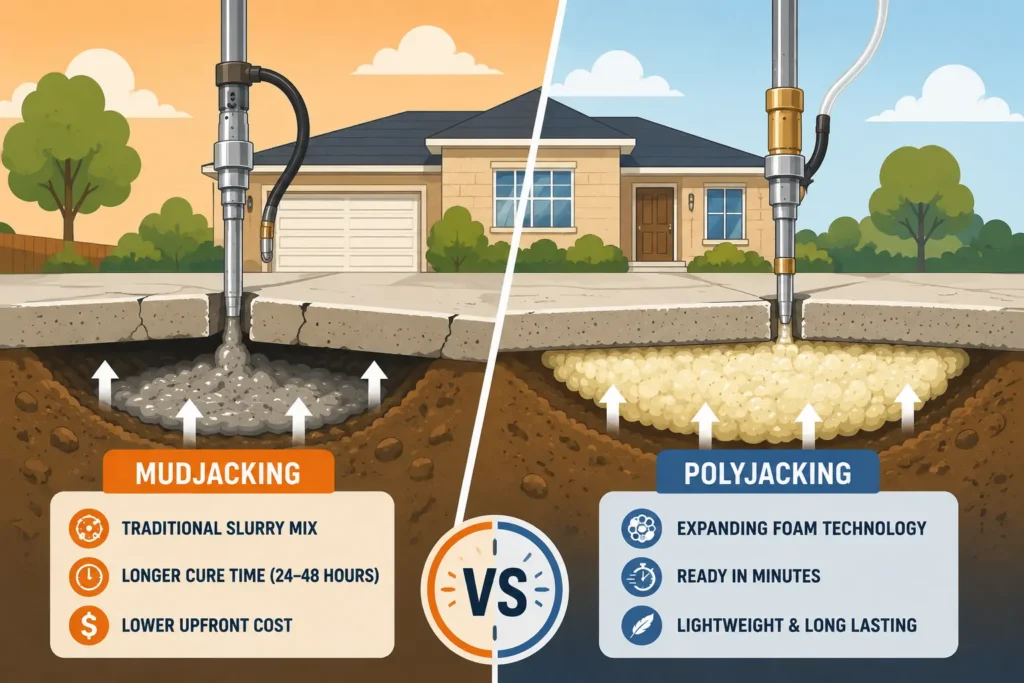
Both mudjacking and polyjacking can fix a sunken driveway, patio, or walkway, but they’re not interchangeable once Texas clay soil enters the picture. Mudjacking offers a lower sticker price today; polyjacking offers a lighter, waterproof, longer-lasting repair that’s built for our soil’s constant swelling and shrinking.
Before choosing a contractor, get quotes for both concrete lifting methods, ask how each one performs specifically in expansive clay, and weigh the cost against how many years you actually want the fix to last.
G.L. Hunt Foundation Repair offers polyurethane foam injection service for driveways, patios, and walkways across Texas, engineered specifically to hold up against expansive clay soil. If you’re comparing mudjacking vs polyjacking quotes, reach out for an inspection and a straightforward cost estimate before you decide.
FAQ
Is polyjacking better than mudjacking?
For most Texas homes, yes. Polyjacking costs more upfront but lasts longer, cures in minutes, and resists the soil movement and moisture that cause mudjacked slabs to sink again. Mudjacking can still suit small, low-traffic, budget-driven repairs.
What is the difference between slabjacking and mudjacking?
Slabjacking is simply another name for mudjacking. Both terms describe lifting a sunken concrete slab by pumping a cement-based slurry underneath it. There’s no technical difference; contractors use the terms interchangeably.
What are the disadvantages of mudjacking?
Mudjacking’s slurry is heavy, absorbs moisture, and can settle again in expansive clay soil. It also requires 24–48 hours of cure time, leaves larger patched holes, and typically lasts fewer years than polyurethane foam injection.
How long will polyjacking last?
Polyjacking typically lasts 10 to 15 years or longer. Because the polyurethane foam is waterproof, lightweight, and doesn’t break down over time, it holds up especially well against Texas’ expansive clay soil compared to mudjacking.
Related Articles
For more expert information about your foundation, crawl space and drainage needs, check out our helpful articles!
Uncategorized
What Are Helical Piers? A Complete Guide
What are helical piers, and when are they needed? Picture this: a homeowner in North…
Uncategorized
Top-Rated Foundation Repair Company in Texas
Not all foundation repair companies are equal. Here's how to spot the difference, and why…

Uncategorized
Slab vs. Pier And Beam Foundations: Which One Is Better For Your Dallas Home?
Forever Homes Need Strong Foundations If you own a home in Dallas, you know that…