If you live in North Texas, you’ve probably noticed large cracks in the ground during a hot summer. This isn’t just a sign of a dry lawn — it’s a sign of the powerful expansive clay soil beneath your feet. For homeowners in Dallas, understanding this soil is the first step in protecting your home!
Quick Read Overview
- The Problem — Dallas is built on expansive clay soil that acts like a sponge, growing when wet and shrinking when dry.
- The Impact — This constant movement puts immense pressure on concrete slabs, leading to cracks, sticking doors and uneven floors.
- The Cost — One in four U.S. homes experiences damage from expansive soils, with total yearly costs exceeding $15 billion—more than all other natural disasters combined.
- The Solution — Proper foundation design for expansive soils and consistent moisture management (such as foundation watering) are key to preventing damage.
Statistics You Should Know
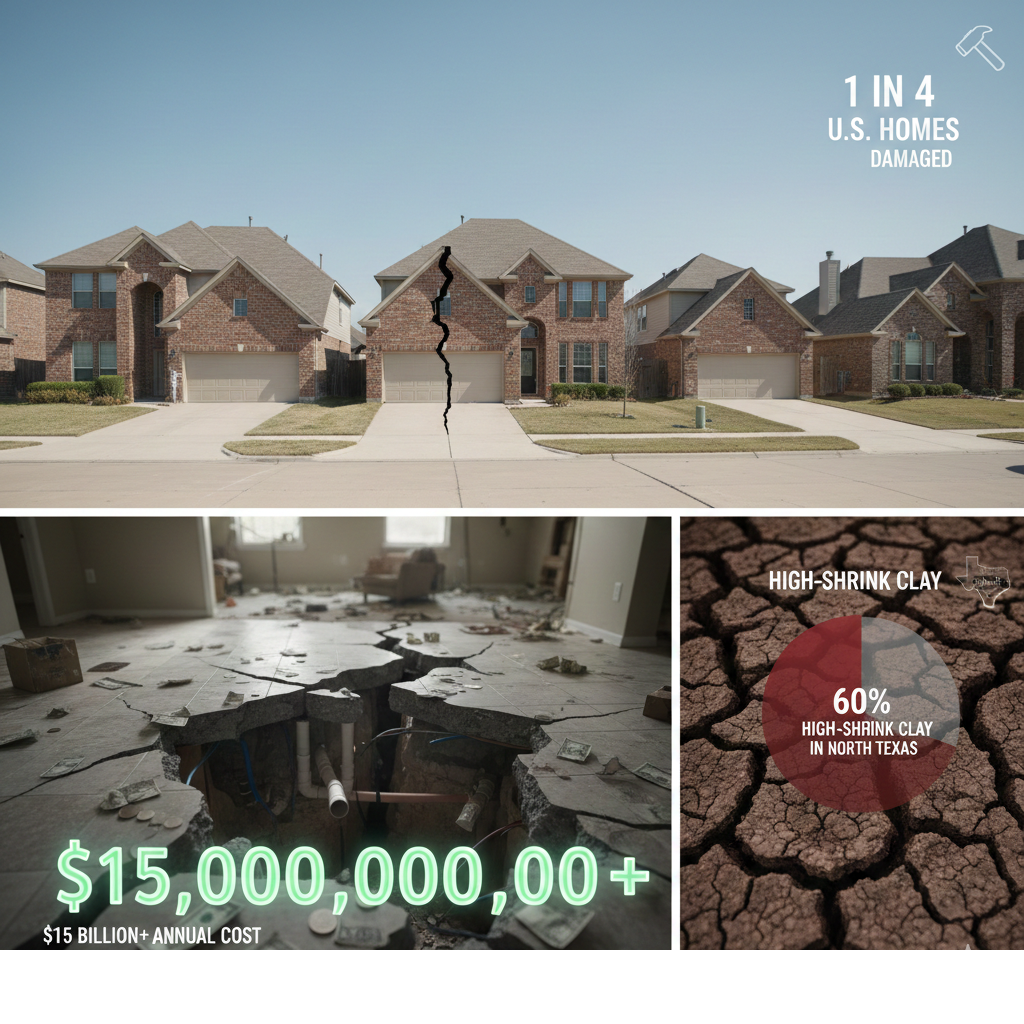
Understanding the scale of the problem helps homeowners realize that foundation maintenance isn’t optional—it’s necessary.
- 1 in 4 — This is the number of homes in the U.S. that will experience some form of disturbance from expansive soils during their lifespan (Source: ASCE).
- $15 Billion+ — This is the estimated annual cost of damage caused by expansive soils in the United States (Source: HUD).
- 60% — In some North Texas neighborhoods, over 60% of the soil is made of high-shrink clay, making it some of the most volatile in the world (Source: ResearchGate).
What Is Expansive Clay Soil?
Most of Dallas and North Texas sit on a layer of heavy, active clay. Unlike sandy soil, which allows water to drain freely, this clay foundation expands and contracts significantly with changes in moisture.
When it rains, clay particles absorb water and swell. When the Texas sun warms the earth during a drought, that same soil loses moisture and shrinks. Experts call this the shrink-swell cycle. In some parts of Dallas, the soil can actually change its volume from 30% to 75% depending on moisture levels.
Why Dallas Is A Hotspot
According to the American Society of Civil Engineers (ASCE), expansive soils cause more financial damage to structures in the U.S. each year than floods, hurricanes, tornadoes and earthquakes combined. Because North Texas has some of the highest clay content in the country — often exceeding 50% clay in areas like Dallas and Tarrant counties — our homes are at the highest risk.
How Clay Soil Damages Your Foundation
Your home’s foundation is designed to be strong and rigid. Although it can handle a little natural settling, it’s not intended to be a trampoline. When the soil moves significantly, the foundation has to move with it.
1. Heaving (The Upward Push)
During a wet spring, the soil under the edges of your home expands. This creates “upheaval,” where the soil pushes the concrete slab upward. If the middle of the house stays still while the edges rise, the concrete will eventually snap, causing large cracks in your floor or exterior brick.
2. Settlement (The Downward Drop)
In a Dallas summer, the soil dries out and pulls away from the foundation. This creates gaps under the house. Without the soil to support the weight, gravity takes over, causing the foundation to settle into these gaps, leading to “foundation settlement.”
3. Differential Movement
The most significant danger is that different parts move at different speeds. If a tree shades the front yard and the backyard is in the sun, the soil will dry unevenly. This differential movement is the primary cause of sticking windows and cracked drywall.
The Best Foundation Design For Expansive Soils
If you’re building a new home or looking for a house in Dallas, the foundation design on expansive soils is the most crucial factor for long-term stability. There are three common types used in our area:
Post-Tension Slabs
These are concrete slabs reinforced with steel cables that are tightened (tensioned) after the concrete is poured. This creates a “monolithic” slab that acts like a heavy raft, helping the house float more evenly on top of the shifting clay.
Slab With Piers
This design uses deep concrete or steel piers that go far below the “active” soil layer to reach stable ground or bedrock. This provides a solid anchor that doesn’t move when the top layer of clay swells.
Pier And Beam Foundations
Often considered the best foundation for older homes on clay soil, these foundations create a crawl space. They allow for easier adjustments if the soil shifts and keep the main structure off the clay surface.
How To Protect Your Dallas Home
You can’t change the dirt under your house, but you can control how much it moves.
- Maintain moisture — Use soaker hoses during the summer to keep the soil around your foundation from drying out and shrinking.
- Fix drainage — Ensure your gutters and downspouts carry water at least 5 to 10 feet away from the house so the soil doesn’t get oversaturated.
- Watch the trees — Large trees can take in hundreds of gallons of water a day, drying out the soil near your foundation. Consider root barriers if a tree is too close.
Call G.L. Hunt
If you notice cracks in your brick, doors that won’t shut or gaps around your windows, it’s time to call the experts at G.L. Hunt for a free estimate. We understand Dallas soil and can help you find the right solution to keep your home on solid ground.
Related Articles
For more expert information about your foundation, crawl space and drainage needs, check out our helpful articles!
Common Foundation Problems
Do Houses On Hills Have Foundation Problems?
Quick Summary: Hillside Foundation Risks Hillside Homes Can Use Some Extra Attention Living in a…
Common Foundation Problems
How Does Dallas Weather Affect My Concrete Slab?
Foundation Damage From Weather If you live in Dallas, you know the saying: “If you…
Common Foundation Problems
Common Foundation Problems In Austin, Texas
Austin Foundation Company The foundation of your home is its most important structural component. It…